Monday, January 31, 2011
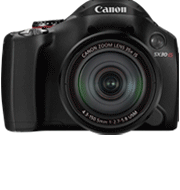
Canon PowerShot SX30 IS
PowerShot SX30 IS showcases Canon optical expertise with an ultra-wide 35x optical zoom. A 4.5-stop optical Image Stabilizer and Zoom Framing Assist make high zoom stills and HD movie shooting a breeze.
Features
* 35x ultra wide-angle zoom
* Optical Image Stabilizer (4.5-stop), USM, VCM
* 14.1 MP CCD
* 6.8 cm (2.7") vari-angle LCD, EVF
* HD movies, HDMI
* Smart Auto
* Manual modes, Low Light and Miniature Effect movie
* Zoom Framing Assist
* Servo AF/AE
* Extensive accessory system
Exceed your ambitions with 35x zoom
35x optical zoom, ultra wide-angle lens
A huge optical zoom range combined with an ultra wide-angle view provides nearly every focal length you’ll need (24-840mm). From wide landscapes and indoor scenes to long range close-ups, it’s a camera for every occasion.
Optical Image Stabilizer
A powerful optical Image Stabilizer provides a range-leading 4.5 stops compensation and allows you to capture sharp images in low light or when using very long focal lengths.
14.1 Megapixel sensor with DIGIC 4 processor
A high-resolution sensor allows printing of very large A2+ prints for impressive displays. It also makes it possible to crop extensively and still get a great shot from a wider scene.
6.8 cm (2.7") vari-angle LCD
The vari-angle PureColor II VA LCD enables easy framing from difficult angles and thanks to Canon’s Quick-bright mode, shooting and viewing in harsh sunlight is made easy at the touch of a button
HD movies with Dynamic IS, HDMI
High quality HD movies (720p) are recorded in stereo sound with Dynamic optical Image Stabilizer for steadier pictures even when moving. The lens’ Ultra Sonic Motor (USM) ensures accurate and silent zooming while Smart Auto optimises movie results from 21 different scenes.
Smart Auto
Smart Auto selects settings from 28 different scenes allowing you to take great pictures without having to worry about the settings. The camera automatically analyses the subject and decides what is best for optimum results.
Manual modes, Low Light and Miniature Effect movie
New shooting modes have been added to make creative experimentation more enjoyable. Give the impression of a smaller scale with Miniature Effect, get better results with Low Light mode and take full control with Manual modes.
Zoom Framing Assist
When shooting with maximum zoom it can be difficult to keep track of a distant subject. At the press of a button Zoom Framing Assist quickly zooms out of the scene - permitting the user to find the subject and put it back in the original frame - then zooms back in the moment the button is released.
Servo AF/AE
Servo AF/AE constantly adjusts focus and exposure on moving subjects allowing you to capture them with great clarity and brightness.
Extensive accessory system
Optional accessories include a Lens Filter Adapter with 67mm thread for attaching lens filters while its concealed hot-shoe is compatible with the Canon Speedlite range of flash units.
Γρήγορες λήψεις με αργές μηχανές
Συχνά οι κάτοχοι compact φωτογραφικών μηχανών διαπιστώνουν πως λόγω της καθυστέρησης στην απόκριση του μηχανισμού εστίασης, φωτομέτρησης και ελέγχου του κλείστρου της μηχανής τους, "χάνουν" την κρίσιμη στιγμή.
Οι γονείς συνήθως βρίσκονται σε αυτή τη θέση προσπαθώντας να φωτογραφίσουν τα παιδιά τους να τους πλησιάζουν τρέχοντας.
Αφού αναφέρουμε πως πιο πρόσφατες prosumer μηχανές παρουσιάζουν μεγάλη βελτίωση στους χρόνους απόκρισης, και πως φυσικά οι μηχανές DSLR έχουν τις καλύτερες επιδόσεις στον τομέα αυτό, να μερικές συμβουλές που θα επιτρέψουν «γρήγορες» λήψεις και στους κατόχους «αργών» φωτογραφικών μηχανών.
* Κλείδωμα εστίασης ή/και φωτομέτρησης (focus/exposure lock): Μια λειτουργία διαθέσιμη σε όλες σχεδόν τις ψφμ, που συνήθως ενεργοποιείται με το πάτημα του κουμπιού του κλείστρου ως τη μέση. Μπορούμε από πριν δηλαδή βάλουμε τη μηχανή να εστιάσει ή/και να φωτομετρήσει σε συγκεκριμένο κάδρο, και την κατάλληλη στιγμή να πιέσουμε ως το τέρμα για να ολοκληρώσουμε τη λήψη. (Για κινούμενα θέματα προβλέπουμε την πορεία του θέματός μας, εφαρμόζουμε τα παραπάνω λίγο πιο μπροστά και περιμένουμε το θέμα μας να έρθει στο κάδρο μας) Τι κερδίζουμε; Την καθυστέρηση εστίασης ή/και φωτομέτρησης.
* Χρήση των εστιακών αποστάσεων στις οποίες η μηχανή μας εστιάζει γρηγορότερα: Πολλές μηχανές εστιάζουν γρηγορότερα σε θέση wide παρά tele
* Χειροκίνητη εστίαση: Αν το επιτρέπει η μηχανή μας και είμαστε σε σχετικά σταθερή απόσταση από το θέμα μας, εστιάζουμε μια φορά χειροκίνητα και ...ξεχνάμε την καθυστέρηση εστίασης (Ιδιαίτερα χρήσιμο σε συνδυασμό με κλειστό διάφραγμα για μεγαλύτερο βάθος πεδίου)
* Φωτογράφιση ριπής (burst mode): Λειτουργία που αν την διαθέτει η μηχανή μας επιτρέπει τη φωτογράφιση ενός αριθμού διαδοχικών λήψεων πολύ γρήγορα, κρατώντας πατημένο το κουμπί του κλείστρου. (Ε, κάποια θα πετύχει εκείνη την κρίσιμη στιγμή που μας ξεφεύγει)
* Απενεργοποίηση λειτουργιών που καθυστερούν τη λήψη όταν δεν χρειάζονται, όπως είναι το άναμμα του φλας στιγμιαία πριν τη λήψη για τη μείωση του φαινομένου των κόκκινων ματιών
* Το μυαλό και το χέρι μας: Εφαρμόζοντας τα παραπάνω μπορούμε να απαλλαγούμε από αρκετούς παράγοντες καθυστέρησης, ή να τους μειώσουμε. Ένας όμως εξακολουθεί να μας ταλαιπωρεί, εκείνη ακριβώς η καθυστέρηση από το πάτημα του κουμπιού ως την πραγματική στιγμή της φωτογράφισης. Ε, εδώ ας αξιοποιήσουμε τη σημαντικότερη «λειτουργία» της μηχανής μας. Το μυαλό και τα χέρια που τη χειρίζονται. Με λίγη παρατήρηση και αρκετή εξάσκηση, μπορούμε να συνηθίσουμε να πατάμε λίγο νωρίτερα το κουμπί του κλείστρου, τόσο όσο χρειάζεται για να αντισταθμίσουμε την καθυστέρηση, με αρκετές πιθανότητες επιτυχίας.
source : http://www.dpgr.gr/index.php?page=fast_shots
Λήψεις βίντεο HD με φωτογραφικές μηχανές
Μια νέα, προσαρτώμενη οθόνη LCD από τη Sony δίνει τη δυνατότητα σε όσους διαθέτουν φωτογραφικές μηχανές DSLR να έχουν μεγαλύτερη και καλύτερη άποψη του υλικού τους όταν πραγματοποιούν λήψεις HD βίντεο.
Η CLM-V55 είναι μια φορητή οθόνη βίντεο με υψηλής ανάλυσης LCD πάνελ WVGA (800 x 480) και διαγώνιο 5”. Προσαρμόζεται με ευκολία στις περισσότερες ψηφιακές φωτογραφικές μηχανές με εναλλάξιμους φακούς και στις συμβατές HD βιντεοκάμερες μέσω του παρεχόμενου αντάπτορα και προβάλλει την εικόνα κατά τη διάρκεια της λήψης ή αναπαραγωγής, με εκπληκτική ευκρίνεια και μεγάλο εύρος γωνίας θέασης.
Η προσαρτώμενη οθόνη αλλάζει κλίση και περιστρέφεται σε οποιαδήποτε γωνία για άνετο καδράρισμα (framing) σε οποιαδήποτε θέση – ακόμη και όταν είστε οι ίδιοι στο πλάνο.
Η CLM-V55 διαθέτει επαγγελματικά χαρακτηριστικά για να βοηθήσει, όσους έχουν πάθος με τη φωτογραφία και τη βιντεοσκόπηση, να πραγματοποιήσουν λήψεις HD βίντεο υψηλής ποιότητας με τη φωτογραφική μηχανή τους που διαθέτει εναλλάξιμους φακούς.
Η λειτουργία μεγέθυνσης των pixel επιτρέπει ακρίβεια στην επιβεβαίωση της εστίασης, καθώς μπορεί να μεγεθύνει μια συγκεκριμένη περιοχή οποιασδήποτε εικόνας Full HD, σε κορυφαία ποιότητα. Συμπληρώνεται από μια λειτουργία επιλογής χρώματος, η οποία τονίζει το περίγραμμα των περιοχών της εικόνας του βίντεο που έχουν εστιαστεί με ακρίβεια.
Ένας εύκολος στη χρήση περιστροφικός διακόπτης ελέγχου σας επιτρέπει να ρυθμίζετε άμεσα και με ακρίβεια μια μεγάλη γκάμα λειτουργιών της οθόνης, χωρίς να χρειαστεί να διακόψετε την βιντεοσκόπηση. Στις παραμέτρους που μπορείτε να ρυθμίσετε περιλαμβάνονται: ο λόγος πλευρών του κάδρου (16:9/4:3), η ένταση του ήχου, η φωτεινότητα, η αντίθεση, ο χρωματικός τόνος (phase), η θερμοκρασία χρώματος και η αυτόματη ρύθμιση φωτεινότητας (auto dimmer). Δείκτες επάνω στην οθόνη διευκολύνουν στην ακρίβεια του καδραρίσματος (framing), δείχνοντας με σαφήνεια τα όρια της περιοχής προβολής μιας τηλεόρασης με λόγο πλευρών οθόνης 16:9 ή 4:3. Η LCD οθόνη διαθέτει ενσωματωμένο μονοφωνικό ηχείο, το οποίο συμπληρώνεται από μια έξοδο ακουστικών για να μπορείτε να ελέγχετε τον ήχο κατά τη διάρκεια της λήψης.
Η CLM-V55 προσαρμόζεται με ευκολία σε ένα μεγάλο αριθμό ψηφιακών φωτογραφικών μηχανών με εναλλάξιμους φακούς της Sony, αλλά και άλλων κατασκευαστών, οι οποίες υποστηρίζουν λήψεις HD βίντεο. Ο παρεχόμενος αντάπτορας προσαρμόζεται με ευκολία στην οθόνη οποιασδήποτε φωτογραφικής μηχανής ή HD βιντεοκάμερας που διαθέτει υποδοχή/πέλμα (shoe) auto-lock ή ISO. Το σήμα από τη μηχανή μεταδίδεται στην οθόνη μέσω του παρεχόμενου καλωδίου HDMI, ενώ η τροφοδοσία εξασφαλίζεται από μια μπαταρία ή από έναν αντάπτορα ρεύματος (και τα δύο προαιρετικά). Η οθόνη CLM-V55 συνοδεύεται από ένα αποσπώμενο παρασολέιγ του LCD πάνελ για πιο άνετη παρακολούθηση της εικόνας σε εξωτερικές λήψεις με δυνατό ήλιο.
Η LCD οθόνη βίντεο CLM-V55 από τη Sony θα είναι διαθέσιμη στην αγορά από τον Μάρτιο του 2011.
Canon unleashes the benchmark PowerShot G12
PowerShot G12 London, UK, 14th September 2010 – Canon today announces the new PowerShot G12 – the latest model in the multi award-winning PowerShot G-series trusted by professional photographers the world over. The new model offers photographers best-in-class flexibility and all-round powerful performance, with professional levels of control and support for a wide range of accessories.
While retaining the classic handling and control of its predecessor, the PowerShot G12 has been designed to offer superior performance to suit the needs of professionals and enthusiasts alike. Canon’s HS System, 720p HD movie recording and Hybrid IS are new additions, delivering premium image quality in stills and movies, and a new Front Dial provides improved handling and swift manual control. The PowerShot G12 is also compatible with a new optional Lens Filter Adapter, which extends with the lens when using the zoom to offer full coverage throughout the zoom range.
The HS System: Premium Canon image quality, even in low light
The PowerShot G12 is the first G-series model to feature Canon’s HS System – a powerful combination of a high-sensitivity 10.0 Megapixel CCD sensor and high-performance DIGIC 4 processor designed to provide outstanding image quality in all lighting conditions, including low light.
The inclusion of the HS System allows shooting at higher ISOs with excellent image quality – enabling users to capture exceptional images in all conditions. This extended ISO range allows users to shoot darker scenes without engaging the flash or using a tripod – capturing correctly-exposed images using only the available light. In situations when use of the flash is necessary, a higher ISO will enable users to extend its effective range and illuminate the subject more effectively. Higher ISOs also enable users to utilise faster shutter speeds – freezing motion to capture moving subjects with a reduced risk of blur.
Allowing users precise control over the ISO level, the dedicated ISO dial now allows adjustments in 1/3 stop increments. In addition to this, a new Auto ISO level adjustment feature allows users to pre-configure the maximum ISO setting they wish to use during shooting and specify how the camera selects the ISO to obtain the best balance between image quality and shutter speed.
In very dark situations, Low Light mode can be used to extend the ISO range up to ISO 12800, with the ability for users to control ISO and white balance to accurately capture the ambience of a dimly-lit environment. Users can also capture fast-moving action with the ability to shoot at up to 4.2 shots per second.
Genuine Canon Lens with Hybrid IS
The PowerShot G12 features a premium 28mm wide-angle 5x optical zoom lens, allowing users to capture sweeping landscapes and get closer to distant subjects during shooting. Benefiting from Canon’s extensive heritage in lens design, the lens has been developed using the same processes and quality standards employed to manufacture Canon’s range of EF lenses, ensuring the capture of sharp, detailed shots while still having a compact size so the lens can retract completely into the camera body when not in use.
Counteracting camera shake and enabling photographers to capture shots in darker conditions, the PowerShot G12’s optical Image Stabilizer allows shooting at shutter speeds approximately 4-stops slower than would be otherwise necessary to achieve a sharp shot. Also included in the PowerShot G12 is Canon’s Hybrid IS technology to increase the effectiveness of the optical Image Stabilizer when shooting macro subjects. The PowerShot G12 can focus as close as 1cm to a subject, and the slightest lateral movement of the photographer can negatively affect image quality, making it difficult to capture blur-free shots without the assistance of a tripod. Hybrid IS counteracts unintentional shift and angular movement – two kinds of camera shake that become particularly pronounced as image magnification increases.
Flexible shooting
Flexible shooting and playback is provided by the PowerShot G12’s 7.0cm (2.8”) high-resolution Vari-Angle PureColor II VA LCD screen. The rotating Vari-Angle design offers easy framing from a range of angles, such as when shooting at ground level or overhead. To accommodate a range of shooting styles, the PowerShot G12 also features an optical viewfinder (OVF) with diopter adjustment, allowing users to match the OVF to their vision. After image capture, photographers can also utilise the newly integrated RGB histogram during playback, allowing them to instantly check the exposure of a shot in detail.
Take complete control
As well as offering Full Manual control and a range of semi-automatic modes, the addition of a new Front Dial provides swift and convenient access to settings during shooting. Users can either prioritise the Front Dial or the rear Multi-Control Dial as the main way of controlling the camera, or use a combination of both. For example, the Front Dial can be set to control aperture in AV mode while the Multi-Control Dial controls white balance or shooting aspect ratio, or it can be used independently, with the rear Multi-Control Dial disabled to prevent accidental changes to settings.
For advanced amateurs and professionals, the PowerShot G12 also shoots uncompressed RAW images and includes Canon’s Digital Photo Professional (DPP) software, providing the ability to edit images after capture. Sharing the same post-editing environment as the EOS system, the PowerShot G12 fits seamlessly into a photographer’s existing workflow.
Electronic level and Multi-Aspect shooting
To aid the capture of level horizons, the PowerShot G12 also features a new Electronic Level function. Using information from the camera’s acceleration sensor, an on-screen indicator allows users to check if the camera is level, working in either horizontal or vertical orientations to ensure level shots of portrait or landscape scenes. Multi-Aspect shooting in 3:2, 4:3, 1:1, 16:9 and 4:5 formats also allows photographers to shoot according to their subject and the intended use of the image, enabling them to choose which composition and result they want to capture as the image is taken and removing the need to post-process.
Stunning images, stunning video – HD movies with stereo sound
For the first time in a G-series model, the PowerShot G12 features 720p HD movie shooting (24fps) with stereo sound. Miniature Effect is also available in movie mode, adding a different dimension to video footage by shooting at a range of selectable slower frame rates for dramatic, compelling time-lapse-style videos which appear of model scale. An integrated HDMI port with CEC compatibility makes it simple for video and stills to be viewed on a HDTV and controlled directly using a compatible HDTV and remote control.
Capture scenes as you see them
Exceeding the limitations of conventional cameras the PowerShot G12 includes a new High Dynamic Range shooting mode*, allowing the capture of high contrast scenes closer to how they appear to the user. While shooting on a tripod, the PowerShot G12 takes three different exposures of the same scene before analysing and combining shots in-camera to create a single image. The resulting shot captures highlight and shadow detail closer to how the photographer sees it.
As part of i-Contrast processing, the PowerShot G12 allows control over the amount of Dynamic Range correction which is applied in the camera to suppress highlight blow out and shadow detail loss in the final result. To allow photographers to brighten only shadowed areas of an image, Shadow Correction is included to brighten darker areas and reveal hidden detail in shadow regions.
To track subjects that are in motion, or to help achieve a creative composition, a new Tracking AF mode has been added to the PowerShot G12. This new mode gives photographers the ability to select objects from the centre of the frame and track them if they move, or if the frame is recomposed.
Extended shooting abilities
The PowerShot G12 offers comprehensive support for a wide range of accessories, expanding both the creative possibilities and providing enhanced results in certain shooting situations. A new lens filter adapter FA-DC58B attaches directly to the lens barrel ring, providing the ability to attach 58mm diameter Canon filters – such as a Circular Polarizer, Neutral Density, Protect and UV. The FA-DC58B is designed to move along with the lens while zooming, preventing vignetting at the wide-angle end of the zoom and providing filter coverage throughout the full optical zoom range of the lens.
The hot shoe provides compatibility with Canon’s range of EX Speedlites**, enabling photographers to both increase the available flash power or use an external flash via a remote shoe cord (OC-E3) for creative off-camera lighting, or to experiment with different lighting techniques. An optional Waterproof Case provides protection at depths of up to 40 meters, allowing users to record deep-water experiences in stunning detail.
While the PowerShot G12 offers the freedom and flexibility of manual control, users can also achieve exceptional image quality using Smart Auto mode. Intelligently detecting the scene and selecting the optimum settings from 28 variables, Smart Auto uses Scene Detection Technology to provide the best results in all conditions – allowing both serious photographers and beginners to capture excellent images instantly.
Eye-Fi connected functions
Easy, wireless content transfers are supported by Eye-Fi connected functions, allowing remote uploads to image sharing websites such as CANON iMAGE GATEWAY. The camera features a dedicated Eye-Fi section within the User Interface, and disables the auto power-down function when the Eye-Fi card transmits data – allowing the easy transfer of content without interruption***.
Designed for photographers who demand exceptional quality in every area, the PowerShot G12 represents a unique blend of premium image quality, flexibility and excellent handling. A great complement to a larger SLR model or a powerful camera in its own right, it’s the perfect compact for professionals and advanced amateurs – delivering outstanding quality from a body small enough to take on every assignment.
Share stories with CANON iMAGE GATEWAY
Owners of the PowerShot G12 can join the CANON iMAGE GATEWAY, an online facility for sharing photos and video. Photographers can take advantage of up to 2GB of personal storage capacity, creating enough room for hundreds of high-quality images. Mobile browsing is also supported, making it easy for friends and family to view photos on the move.
Canon PowerShot G12 – key features:
*
HS System
*
High-sensitivity 10 MP CCD
*
28mm wide, 5x zoom lens, Hybrid IS
*
7.0 cm (2.8") Vari-Angle LCD, Electronic Level, OVF
*
Front Dial, Full Manual & RAW
*
HD movies, HDMI
*
High Dynamic Range mode
*
Smart Auto
*
Multi-Aspect Shooting
*
Extensive accessory system
* Tripod required for High Dynamic Range shooting.
** See specification for details.
*** This product is not guaranteed to support Eye-Fi card functions (including wireless transfer). In case of an issue with an Eye-Fi card, please check with the card manufacturer.
Also note that approval is required to use Eye-Fi cards in many countries or regions. Without approval, use of the card is not permitted. If it is unclear whether the card has been approved for use in the area, please check with the card manufacturer.
PowerShot G12 London, UK, 14th September 2010 – Canon today announces the new PowerShot G12 – the latest model in the multi award-winning PowerShot G-series trusted by professional photographers the world over. The new model offers photographers best-in-class flexibility and all-round powerful performance, with professional levels of control and support for a wide range of accessories.
While retaining the classic handling and control of its predecessor, the PowerShot G12 has been designed to offer superior performance to suit the needs of professionals and enthusiasts alike. Canon’s HS System, 720p HD movie recording and Hybrid IS are new additions, delivering premium image quality in stills and movies, and a new Front Dial provides improved handling and swift manual control. The PowerShot G12 is also compatible with a new optional Lens Filter Adapter, which extends with the lens when using the zoom to offer full coverage throughout the zoom range.
The HS System: Premium Canon image quality, even in low light
The PowerShot G12 is the first G-series model to feature Canon’s HS System – a powerful combination of a high-sensitivity 10.0 Megapixel CCD sensor and high-performance DIGIC 4 processor designed to provide outstanding image quality in all lighting conditions, including low light.
The inclusion of the HS System allows shooting at higher ISOs with excellent image quality – enabling users to capture exceptional images in all conditions. This extended ISO range allows users to shoot darker scenes without engaging the flash or using a tripod – capturing correctly-exposed images using only the available light. In situations when use of the flash is necessary, a higher ISO will enable users to extend its effective range and illuminate the subject more effectively. Higher ISOs also enable users to utilise faster shutter speeds – freezing motion to capture moving subjects with a reduced risk of blur.
Allowing users precise control over the ISO level, the dedicated ISO dial now allows adjustments in 1/3 stop increments. In addition to this, a new Auto ISO level adjustment feature allows users to pre-configure the maximum ISO setting they wish to use during shooting and specify how the camera selects the ISO to obtain the best balance between image quality and shutter speed.
In very dark situations, Low Light mode can be used to extend the ISO range up to ISO 12800, with the ability for users to control ISO and white balance to accurately capture the ambience of a dimly-lit environment. Users can also capture fast-moving action with the ability to shoot at up to 4.2 shots per second.
Genuine Canon Lens with Hybrid IS
The PowerShot G12 features a premium 28mm wide-angle 5x optical zoom lens, allowing users to capture sweeping landscapes and get closer to distant subjects during shooting. Benefiting from Canon’s extensive heritage in lens design, the lens has been developed using the same processes and quality standards employed to manufacture Canon’s range of EF lenses, ensuring the capture of sharp, detailed shots while still having a compact size so the lens can retract completely into the camera body when not in use.
Counteracting camera shake and enabling photographers to capture shots in darker conditions, the PowerShot G12’s optical Image Stabilizer allows shooting at shutter speeds approximately 4-stops slower than would be otherwise necessary to achieve a sharp shot. Also included in the PowerShot G12 is Canon’s Hybrid IS technology to increase the effectiveness of the optical Image Stabilizer when shooting macro subjects. The PowerShot G12 can focus as close as 1cm to a subject, and the slightest lateral movement of the photographer can negatively affect image quality, making it difficult to capture blur-free shots without the assistance of a tripod. Hybrid IS counteracts unintentional shift and angular movement – two kinds of camera shake that become particularly pronounced as image magnification increases.
Flexible shooting
Flexible shooting and playback is provided by the PowerShot G12’s 7.0cm (2.8”) high-resolution Vari-Angle PureColor II VA LCD screen. The rotating Vari-Angle design offers easy framing from a range of angles, such as when shooting at ground level or overhead. To accommodate a range of shooting styles, the PowerShot G12 also features an optical viewfinder (OVF) with diopter adjustment, allowing users to match the OVF to their vision. After image capture, photographers can also utilise the newly integrated RGB histogram during playback, allowing them to instantly check the exposure of a shot in detail.
Take complete control
As well as offering Full Manual control and a range of semi-automatic modes, the addition of a new Front Dial provides swift and convenient access to settings during shooting. Users can either prioritise the Front Dial or the rear Multi-Control Dial as the main way of controlling the camera, or use a combination of both. For example, the Front Dial can be set to control aperture in AV mode while the Multi-Control Dial controls white balance or shooting aspect ratio, or it can be used independently, with the rear Multi-Control Dial disabled to prevent accidental changes to settings.
For advanced amateurs and professionals, the PowerShot G12 also shoots uncompressed RAW images and includes Canon’s Digital Photo Professional (DPP) software, providing the ability to edit images after capture. Sharing the same post-editing environment as the EOS system, the PowerShot G12 fits seamlessly into a photographer’s existing workflow.
Electronic level and Multi-Aspect shooting
To aid the capture of level horizons, the PowerShot G12 also features a new Electronic Level function. Using information from the camera’s acceleration sensor, an on-screen indicator allows users to check if the camera is level, working in either horizontal or vertical orientations to ensure level shots of portrait or landscape scenes. Multi-Aspect shooting in 3:2, 4:3, 1:1, 16:9 and 4:5 formats also allows photographers to shoot according to their subject and the intended use of the image, enabling them to choose which composition and result they want to capture as the image is taken and removing the need to post-process.
Stunning images, stunning video – HD movies with stereo sound
For the first time in a G-series model, the PowerShot G12 features 720p HD movie shooting (24fps) with stereo sound. Miniature Effect is also available in movie mode, adding a different dimension to video footage by shooting at a range of selectable slower frame rates for dramatic, compelling time-lapse-style videos which appear of model scale. An integrated HDMI port with CEC compatibility makes it simple for video and stills to be viewed on a HDTV and controlled directly using a compatible HDTV and remote control.
Capture scenes as you see them
Exceeding the limitations of conventional cameras the PowerShot G12 includes a new High Dynamic Range shooting mode*, allowing the capture of high contrast scenes closer to how they appear to the user. While shooting on a tripod, the PowerShot G12 takes three different exposures of the same scene before analysing and combining shots in-camera to create a single image. The resulting shot captures highlight and shadow detail closer to how the photographer sees it.
As part of i-Contrast processing, the PowerShot G12 allows control over the amount of Dynamic Range correction which is applied in the camera to suppress highlight blow out and shadow detail loss in the final result. To allow photographers to brighten only shadowed areas of an image, Shadow Correction is included to brighten darker areas and reveal hidden detail in shadow regions.
To track subjects that are in motion, or to help achieve a creative composition, a new Tracking AF mode has been added to the PowerShot G12. This new mode gives photographers the ability to select objects from the centre of the frame and track them if they move, or if the frame is recomposed.
Extended shooting abilities
The PowerShot G12 offers comprehensive support for a wide range of accessories, expanding both the creative possibilities and providing enhanced results in certain shooting situations. A new lens filter adapter FA-DC58B attaches directly to the lens barrel ring, providing the ability to attach 58mm diameter Canon filters – such as a Circular Polarizer, Neutral Density, Protect and UV. The FA-DC58B is designed to move along with the lens while zooming, preventing vignetting at the wide-angle end of the zoom and providing filter coverage throughout the full optical zoom range of the lens.
The hot shoe provides compatibility with Canon’s range of EX Speedlites**, enabling photographers to both increase the available flash power or use an external flash via a remote shoe cord (OC-E3) for creative off-camera lighting, or to experiment with different lighting techniques. An optional Waterproof Case provides protection at depths of up to 40 meters, allowing users to record deep-water experiences in stunning detail.
While the PowerShot G12 offers the freedom and flexibility of manual control, users can also achieve exceptional image quality using Smart Auto mode. Intelligently detecting the scene and selecting the optimum settings from 28 variables, Smart Auto uses Scene Detection Technology to provide the best results in all conditions – allowing both serious photographers and beginners to capture excellent images instantly.
Eye-Fi connected functions
Easy, wireless content transfers are supported by Eye-Fi connected functions, allowing remote uploads to image sharing websites such as CANON iMAGE GATEWAY. The camera features a dedicated Eye-Fi section within the User Interface, and disables the auto power-down function when the Eye-Fi card transmits data – allowing the easy transfer of content without interruption***.
Designed for photographers who demand exceptional quality in every area, the PowerShot G12 represents a unique blend of premium image quality, flexibility and excellent handling. A great complement to a larger SLR model or a powerful camera in its own right, it’s the perfect compact for professionals and advanced amateurs – delivering outstanding quality from a body small enough to take on every assignment.
Share stories with CANON iMAGE GATEWAY
Owners of the PowerShot G12 can join the CANON iMAGE GATEWAY, an online facility for sharing photos and video. Photographers can take advantage of up to 2GB of personal storage capacity, creating enough room for hundreds of high-quality images. Mobile browsing is also supported, making it easy for friends and family to view photos on the move.
Canon PowerShot G12 – key features:
*
HS System
*
High-sensitivity 10 MP CCD
*
28mm wide, 5x zoom lens, Hybrid IS
*
7.0 cm (2.8") Vari-Angle LCD, Electronic Level, OVF
*
Front Dial, Full Manual & RAW
*
HD movies, HDMI
*
High Dynamic Range mode
*
Smart Auto
*
Multi-Aspect Shooting
*
Extensive accessory system
* Tripod required for High Dynamic Range shooting.
** See specification for details.
*** This product is not guaranteed to support Eye-Fi card functions (including wireless transfer). In case of an issue with an Eye-Fi card, please check with the card manufacturer.
Also note that approval is required to use Eye-Fi cards in many countries or regions. Without approval, use of the card is not permitted. If it is unclear whether the card has been approved for use in the area, please check with the card manufacturer.
Monday, November 1, 2010
Sony introduces VAT back scheme

Sony UK will offer customers ‘VAT Back’ across its product range in a move to help the nation save money on Christmas presents such as compact cameras, e-Readers and Blu-ray players, as well as larger purchases ahead of the forthcoming UK VAT rise in January.
Sony developed the initiative through extensive consumer testing which revealed that the VAT rise is a major concern for consumers, especially in the run up to Christmas.
The campaign – a first for a consumer electronics company in the UK – will run until Christmas Eve and feature a wide range of high street retailers such as John Lewis, Tesco Extra, M&S Home, Jessops, PC World, Amazon, Comet, Currys and Argos, as well as independent outlets and Sony Centres.
Andy Benson, Commercial Director, Sony UK said: “Next year is likely to be a tough time for everyone, and with Christmas around the corner, getting the ‘VAT Back’ will hopefully make the difference for anyone in two minds about whether to make that extra special purchase for the family or as a Christmas gift ”
For consumers to benefit from the offer the full price of the item is payable in-store then shoppers have until 31 January 2011 to claim the VAT cash back from Sony on purchases made between 28 October and 24 December. The scheme includes all 3D televisions and Blu-ray products, full high-definition AVC Handycams and selected digital cameras, Readers, VAIO netbooks and iPod docks.
The new initiative is supported by a national advertising campaign, staring Sir Derek Jacobi as Scrooge in a modern-day version of A Christmas Carol. The ad opens with a bedraggled Scrooge alone in a gloomy London flat on Christmas Eve. He reads a newspaper headline and voices the message aloud ‘V.A.T back ….. Sony….ends Christmas Eve’ which inspires him to purchase a wealth of Sony gifts for his nephew’s family.
A dedicated online hub for the initiative - www.sony.co.uk/vatback - will launch on 28 October to inform consumers which products are included in the promotion, where to find their nearest store and how to claim their VAT back. The official launch slot for the ad will be during the ad break of X Factor on 30 October, and will be an extended two minute version of the ad.
For more information please visit www.sony.co.uk
Canon EOS 550D Review
Entry-level APS-C digital SLR with HD video
Canon completely changed the photographic landscape in 2003 with the launch of the EOS 300D. It was the first sub-£1,000 digital SLR and pathed the way for the DSLRs we use today. Fast-forward seven years and Canon has achieved another major feat by announcing an 18-megapixel DSLR boasting HD video along with various other cutting-edge features. It's potentially set to shake-up the competitive entry-level sector if its performance can match its features-list. We find out if the EOS 550D is as good as it sounds or whether the low price has led to one too many corners being cut.
Handling & ease of use
The small size and the curved shape of the EOS 550D is sure to be an instant hit with would-be purchasers. Not only is the camera small, it's very light too and the pronounced handgrip provides a very secure hold. Used with smaller zooms like the 18-55mm kit lens or 50-200mm, it provides a very good balance and is small and lightweight enough not to prove obstructive to everyday use. The body may feel slightly plasticky to some and is very similar (although not identical) to the EOS 500D.
Despite the very high specification, the EOS 550D has a very clean control layout that should not prove intimidating, even to DSLR newcomers. The top-plate is particularly clutter-free, with the left side devoid of controls and the right side sporting the main exposure mode dial, an on/off switch and ISO button, with the shutter release button and input dial placed on the top of the handgrip.
The majority of buttons is located on the rear of the camera and is very neatly arranged, with most positioned on the right of the large LCD monitor. A four-way control allows access to key functions such as autofocus and White Balance, with a number of other buttons allowing access to functions such as exposure compensation and Live View. Above the LCD are the two main display buttons that activate the menu and change how information is displayed on the screen.
The LCD itself is superb, with the 3in screen (3:2) ratio providing a bright and colourful display that is super-sharp thanks to the very high resolution. The on-screen menu is very comprehensive and easy to navigate, while the display can be adjusted to suit your preference. The addition of the Q (Quick Control) button is very useful too, as it allows you to scroll through the various functions on the screen to make fast changes using either the front input dial or the SET button and four-way control.
The viewfinder is pretty good, with a comfy hood to protect from glare and a dioptric correction facility, as well as a sensor that conserves battery power by switching off the LCD when you look through the viewfinder.
There are very few grumbles that can be levelled at the EOS 550D. It feels a little more plastic than similarly-priced Nikons (but is tough nonetheless), but other than that, the EOS 550D handles well and is very easy to use. 23/25
Features
In terms of resolution, nothing below £1,500 comes close to matching the 18-megapixels on offer from the EOS 550D, which delivers a maximum image size of 5184x3456 pixels. This factor alone makes the EOS 550D a very tempting proposition, but the inclusion of a fully-featured HD video facility raises its appeal further. While the debate continues on just how useful a movie mode is to DSLR photographers, the fact is that it's certainly proving to be a strong selling point and it's a feature that an increasing number of snappers are finding uses for.
Obviously, HD video is still a peripheral feature for many, but even if you don't plan to use it, the extensive range of core features on offer still make the EOS 550D very good value for money.
There is a full range of exposure modes from subject-biased programs through to semi-auto and manual modes. It's backed up by a choice of four metering patterns: 63-zone Evaluative, spot, partial and centre-weighted average. There is also a number of exposure overrides, including exposure compensation of +/-5 stops, bracketing (+/-2 stops) and AE Lock. It's worth noting that the Evaluative pattern uses the iFCL system found on the EOS 7D, which analyses focus, colour and luminance information when calculating exposure. Under the second tab of the menu system, you'll also find an Auto Lighting Optimizer, which offers a boost to the tonal range covered with three settings available: low, medium and strong.
The AF system uses nine points arranged in a diamond array that covers a wide area of the frame, with the central point using the more sensitive cross-type sensor. You can have them all active or select them individually, with a pick of three modes: One-Shot, AI Servo (continuous AF) or AI Focus, which combines the two. Among the 12 Custom Functions is one (CF7), which enables an AF-assist beam when shooting in low light.
The EOS 550D's integral flash covers lenses as wide as 17mm and offers a range of modes, including flash compensation, red-eye reduction, second-curtain sync and flash exposure lock (similar to spot metering for flash).
Picture Styles are accessed via the four-way control or menu and offer a good choice of parameters, including portrait, landscape and faithful. Each can be manipulated to adjust the sharpness, contrast, saturation and colour tone, with three user-defined settings to save your preferences to. Select Monochrome and as well as sharpness and contrast, you can set a filter (yellow, orange, red, green) and toning effect (sepia, blue, purple and green).
The APS-C sensor lacks a shake reduction facility, as these are built into the lenses, but offers dust reduction in the form of a high-vibration system and software. The EOS 550D's pixels use the gapless micro-lens system found on the EOS 50D that increases the efficiency of each pixel.
The EOS 550D sports 14-bit image processing, handled by its DIGIC 4 processor, which promises smoother tonal gradation and more natural colours. It also offers advanced noise reduction, which may prove useful if you shoot at higher ISO ratings (the Canon has an ISO range of 100-6400, with a High setting of 12,800) and allows for continuous shooting at up to 3.7 frames-per-second. While Custom Functions are rarely mentioned, it's worth pointing out CF6, which activates Highlight tone priority to boost highlight detail, mirror lock-up (CF8) and CF12, which adds image verification data to your shots. Finally, the EOS 550D boasts a depth-of-field preview facility, which while not popular with DSLR newcomers, will find favour with traditionalist photographers. Overall, the Canon has more than enough features for beginners right through to enthusiasts. 24/25
Performance
The EOS 550D is designed to take good pictures easily and that is exactly what it does. It's very fast to power up, responsive to use and logical to control. The result is a DSLR that's fast and easy to use. Whether left to operate fully automatically or with user-intervention, the EOS 550D delivers images that are consistently well exposed and sharp. The 63-zone Evaluative meter works and rarely falters, with the exception of backlighting and the occasional high-contrast scene. The autofocus is very fast and responsive, coping well with tricky conditions such as when shooting close-ups and focusing in low light. Images display excellent colour reproduction with good saturation and sharpness is from in-camera JPEGs is very good, although JPEGs from converted Raw files are slightly better. Noise is very well controlled at lower ISO ratings and images at up to ISO 1600, while soft and with slight noise, were still usable, with decent colour reproduction. The HD video function works well but in truth wasn't tested in any great depth as due to time constraints, we tested our sample for stills photography. No model-specific problems were noted and apart from the White Balance struggling with tungsten, the EOS 550D performed well in all areas. 23/25
Verdict
Canon needs the EOS 550D to be the complete all-rounder to dominate this area of the market and judging from the two weeks I've had with the camera, I have to say I think it is. In terms of what a would-be user expects, it ticks all the boxes. It's small, lightweight and easy to use and its range of features are more than enough for beginners and advanced amateurs alike. Its performance doesn't disappoint either, delivering high-quality images at an exceptional resolution for the price. There are several very good models at this price but none have the all-round appeal of the EOS 550D. Regardless of whether or not you plan to use the HD video, in terms of value-for-money, there is nothing in its class to match it and I can see it being a runaway success and one of the year's best-sellers.
Handling & ease of use 23/25
Features 24/25
Performance 23/25
Value for Money 24/25
Overall 94/100
HD movie modes
Not all HD video modes are the same and the EOS 550D boasts an impressive set-up passed down from more expensive models. It offers true HD recordings (1080P) at 30 frames-per-second and offers both auto and manual control of apertures and shutter speeds.
Supplied software
As with all Canon DSLRs, the EOS 550D is supplied with a comprehensive range of software packages. These include Digital Photo Professional for editing and converting Raw files, Image Browser for reviewing shots, Stitch for creating panoramics and Picture Style Editor for adding your own creations to the camera's range of Picture Style settings.
Supplied accessories
The Canon EOS 550D kit is supplied with the following accessories: battery charger (LC-E8), Li-ion battery (LP-E8), wide strap, USB cable, body cap, software CD and instruction manual.
Subscribe to:
Posts (Atom)


